
-
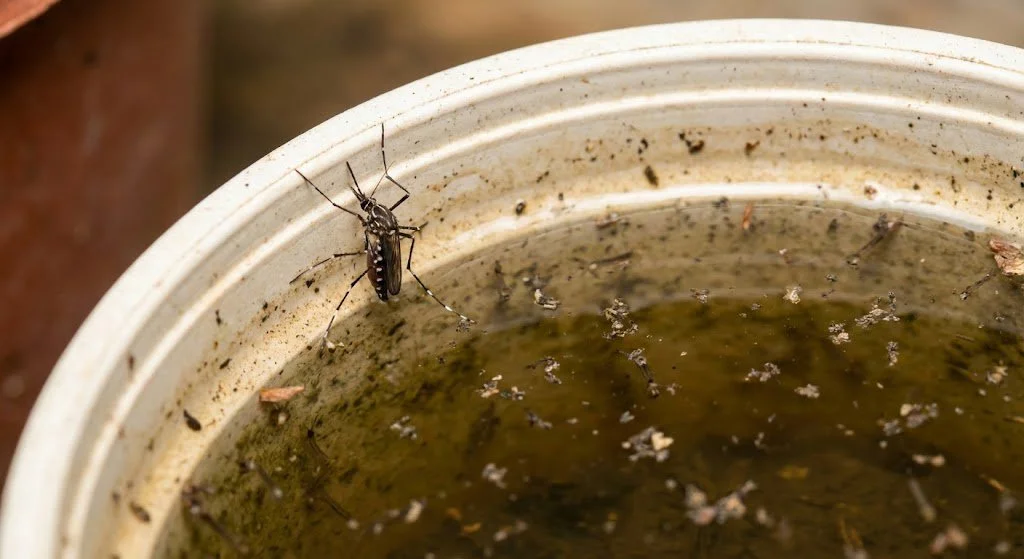
The "Container Breeders" (e.g., Aedes species)
Appearance: Black bodies with white stripes (e.g., Asian Tiger Mosquito).
Behavior: These are aggressive day-biters. They fly low to the ground and target ankles and legs.
Breeding: They do not need a pond. They breed in tiny amounts of water found in bottle caps, saucers, and toys.
-
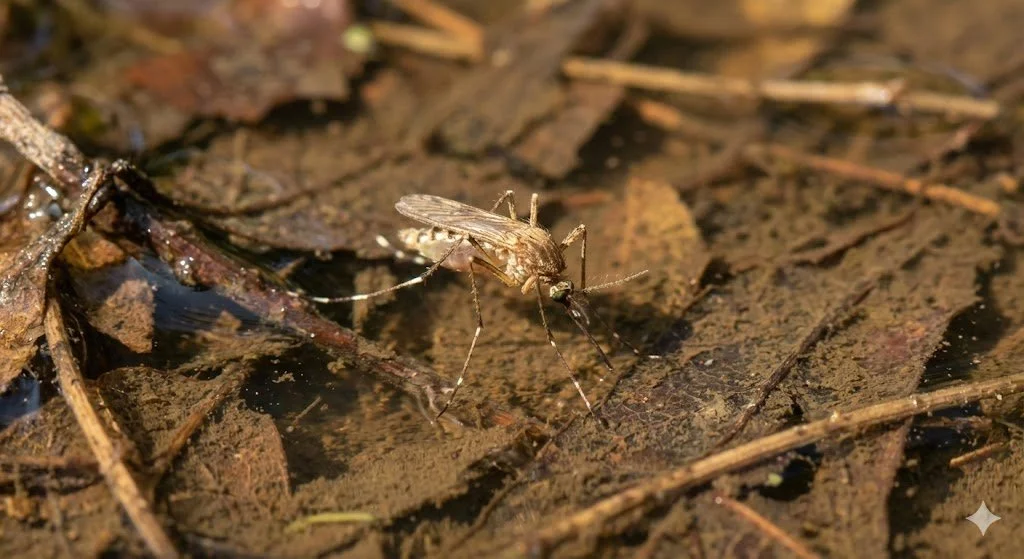
The "Floodwater/Culex" Mosquitoes
Appearance: Brown/Grey, plain looking.
Behavior: These are the classic dusk and dawn feeders. They whine in your ear at night.
Breeding: They prefer stagnant, nasty water (storm drains, bird baths, clogged gutters).
-
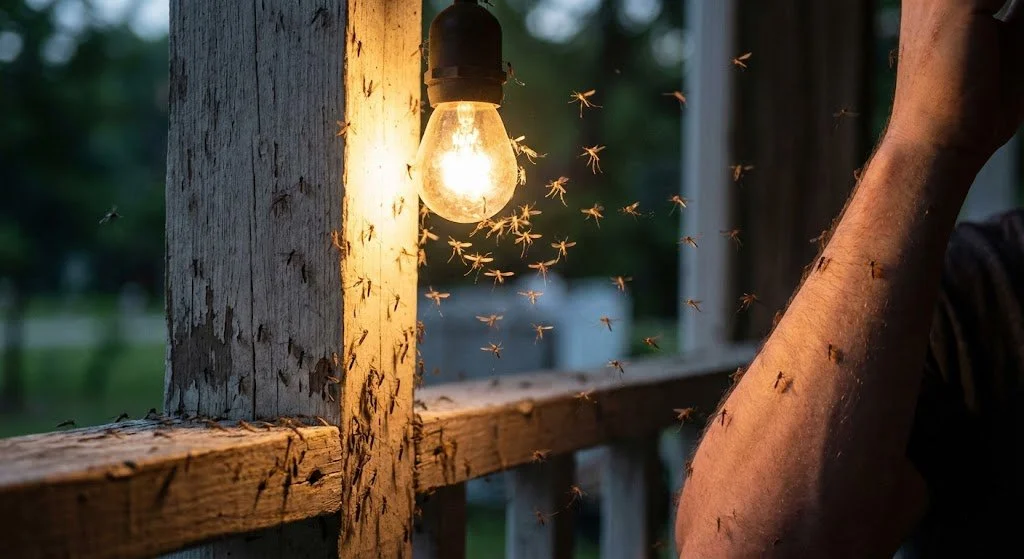
The Health Risks
Mosquitoes inject saliva when they bite to stop blood from clotting. This exchange of fluids transmits pathogens.
Human Diseases: West Nile Virus, Zika Virus, Dengue Fever, Chikungunya, and Encephalitis.
Pet Health: Mosquitoes are the sole cause of Heartworm in dogs and cats. A single bite can infect your pet with this potentially fatal parasite.
Mosquito Control Information
Identification, Biology, and Control Strategies
Mosquitoes are arguably the most dangerous creature on earth. Beyond the annoying itch, they are the primary vectors for devastating diseases affecting humans and pets. Effective control focuses on interrupting their life cycle, particularly the aquatic breeding stage.
1. Identification: The Carriers
While there are thousands of species, homeowners typically deal with two main types based on behavior:
A. The "Container Breeders" (e.g., Aedes species)
Appearance: Black bodies with white stripes (e.g., Asian Tiger Mosquito).
Behavior: These are aggressive day-biters. They fly low to the ground and target ankles and legs.
Breeding: They do not need a pond. They breed in tiny amounts of water found in bottle caps, saucers, and toys.
B. The "Floodwater/Culex" Mosquitoes
Appearance: Brown/Grey, plain looking.
Behavior: These are the classic dusk and dawn feeders. They whine in your ear at night.
Breeding: They prefer stagnant, nasty water (storm drains, bird baths, clogged gutters).
2. The Health Risks
Mosquitoes inject saliva when they bite to stop blood from clotting. This exchange of fluids transmits pathogens.
Human Diseases: West Nile Virus, Zika Virus, Dengue Fever, Chikungunya, and Encephalitis.
Pet Health: Mosquitoes are the sole cause of Heartworm in dogs and cats. A single bite can infect your pet with this potentially fatal parasite.
3. Why are they in my yard?
Mosquitoes need two things to survive:
Stagnant Water: Females must have water to lay eggs. Eggs can hatch in as little as 48 hours. If you have standing water, you have a mosquito nursery.
Shade & Vegetation: Adult mosquitoes dehydrate easily. During the heat of the day, they rest on the underside of leaves in dense bushes, ivy, and tall grass.
4. Professional Treatment Methods
We use a "Barrier Protection" strategy to reduce the population by 85–95%.
1. Adulticiding (Misting): We apply a residual mist to the foliage (bushes, trees, shrubs) around your home. When mosquitoes land on these leaves to rest, they absorb the product and die.
2. Larviciding: We place biological granules or "dunks" in water sources that cannot be drained (like French drains or ornamental ponds). This kills the larvae before they can fly.
3. Insect Growth Regulators (IGRs): We add a hormone mimic to our mist that prevents mosquitoes from reproducing or maturing into adults.
-
No service can guarantee 100% elimination. Mosquitoes can fly in from your neighbor’s yard or from miles away. Our goal is population reduction. You will see a drastic drop in activity, allowing you to enjoy your yard again, but you may still see the occasional stray mosquito.
-
We take pollinator safety seriously.
Targeted Application: We spray the underside of leaves where mosquitoes hide, avoiding open flowers where bees forage.
Timing: We avoid spraying during peak foraging hours.
Product Choice: We use products designed to bind to foliage rather than drift.
-
Minimally. Citronella candles only work if you are standing directly in the smoke plume. Sonic devices (ultrasonic keychains) have been proven scientifically ineffective. They do not repel mosquitoes.
-
Mosquitoes are attracted to:
CO2: Heavy breathers or people exercising attract more.
Heat & Sweat: Lactic acid in sweat is a magnet.
Blood Type: Studies suggest Type O blood may be more attractive.
Genetics: Some people naturally secrete chemicals that mask their scent, while others do not
-
Once the product has dried on the leaves (usually 30–60 minutes), it becomes rain-resistant. However, heavy, continuous rains can create new breeding pockets, which might require a touch-up.