
-
Roof Rat (Black Rat):
Size: Sleek and agile. Smaller than Norway rats. Tail is longer than the head and body combined.
Behavior: Excellent climbers. They prefer high places like attics, rooflines, and trees.
-
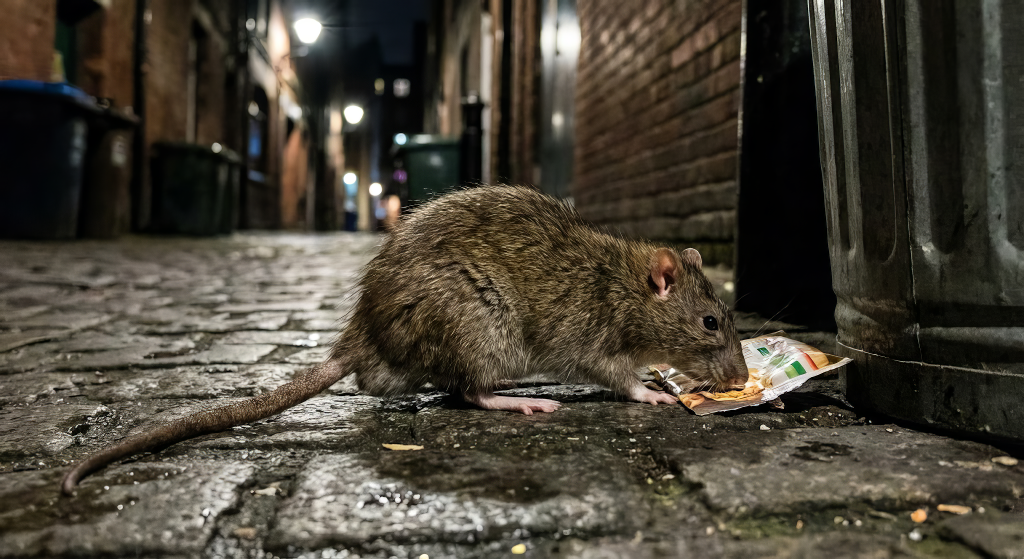
Norway Rat (Sewer Rat/Brown Rat):
Size: Large and bulky, up to 16 inches long (including tail). Blunt nose, small ears.
Behavior: Neophobic (afraid of new things). They are suspicious of new traps or objects in their environment. They burrow in the ground or live in basements/sewers.
-
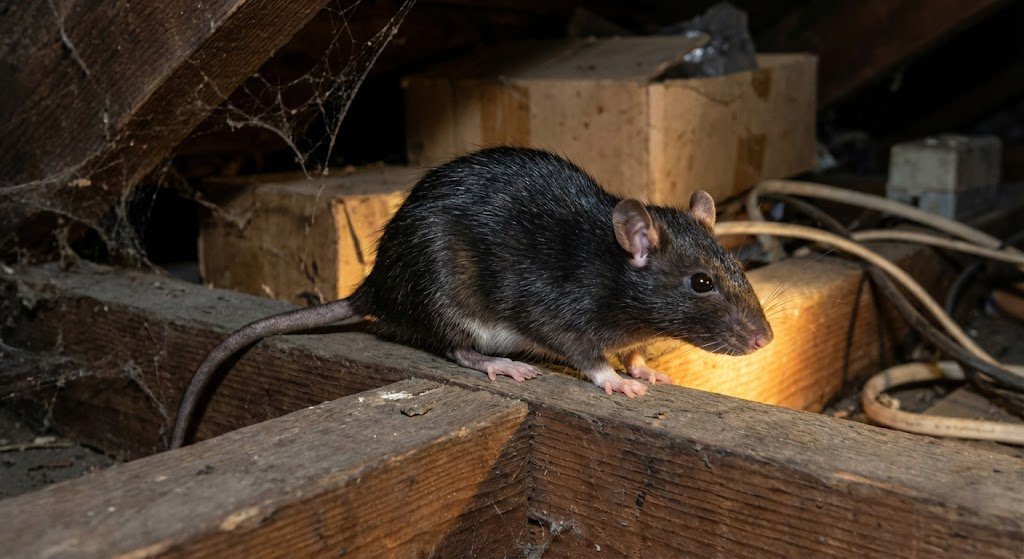
Roof Rat (Black Rat):
Size: Sleek and agile. Smaller than Norway rats. Tail is longer than the head and body combined.
Behavior: Excellent climbers. They prefer high places like attics, rooflines, and trees.
Identification, Biology, and Control Strategies
Rodents are commensal pests, meaning they "share the table" with humans. They are dependent on us for food, water, and shelter. An infestation is not just a nuisance; it is a serious threat to property and health.
1. Identification: What are you dealing with?
Knowing the difference between a mouse and a rat is critical, as trapping strategies differ significantly for each.
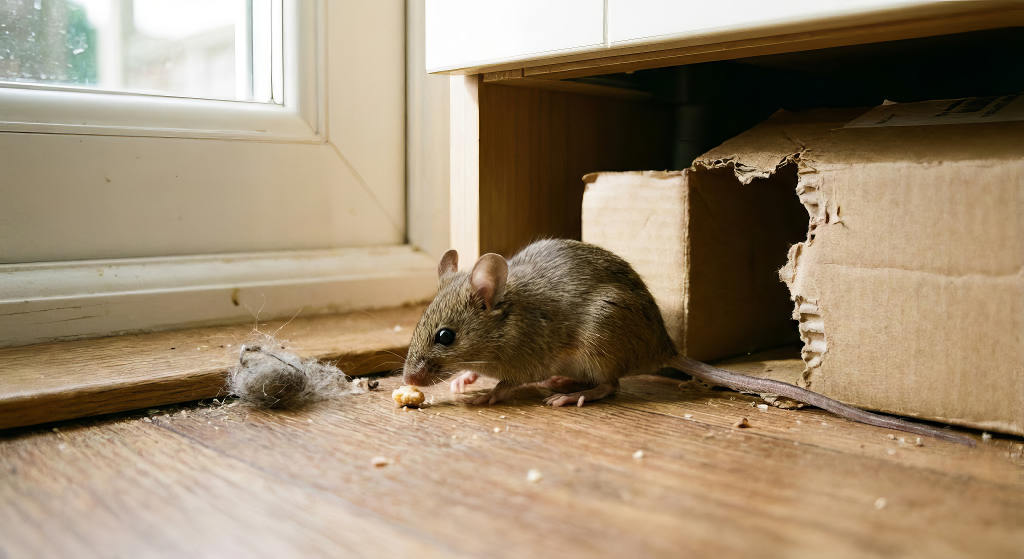
House Mouse (Mus musculus):
Size: Small, dusty grey, 2.5 to 3.5 inches long (excluding tail).
Behavior: Curious. They will explore new objects (like traps) quickly. They nest close to food sources, often within 10–30 feet.
Norway Rat (Sewer Rat/Brown Rat):
Size: Large and bulky, up to 16 inches long (including tail). Blunt nose, small ears.
Behavior: Neophobic (afraid of new things). They are suspicious of new traps or objects in their environment. They burrow in the ground or live in basements/sewers.
Roof Rat (Black Rat):
Size: Sleek and agile. Smaller than Norway rats. Tail is longer than the head and body combined.
Behavior: Excellent climbers. They prefer high places like attics, rooflines, and trees.
2. The Dangers of Rodents
Rodents cause damage in two distinct ways:
A. Structural Damage
Gnawing: Rodents have incisors that never stop growing. To keep them sharp and short, they must gnaw on hard surfaces. They frequently chew through:
Electrical Wiring: A leading cause of undetermined house fires.
Pipes: Causing water leaks (especially PEX piping).
Insulation: They soil attic insulation with urine and feces, reducing its efficiency and requiring costly replacement.
B. Health Risks
Disease: They carry pathogens such as Salmonella, Hantavirus (in deer mouse droppings), and Leptospirosis.
Parasites: They introduce fleas, ticks, and mites into the home.
3. Signs of an Infestation
Droppings:
Mouse: Size of a grain of rice, pointed ends.
Rat: Size of a capsule or olive pit, blunt ends.
Rub Marks: Greasy dark smudges along baseboards or walls where their dirty fur rubs against surfaces as they travel.
Gnaw Marks: Fresh wood shavings or teeth marks on door corners, food containers, or wires.
Noises: Scratching, scampering, or squeaking in the walls or attic, typically at night.
Urine Pillars: In severe infestations, piles of urine, grease, and dirt build up into small mounds.
4. Professional Treatment Methods
We use an "Integrated Pest Management" (IPM) approach. Poison alone is rarely the answer.
1. Exclusion (Rodent-Proofing): This is the permanent solution. We seal the entry points—gaps around pipes, vents, rooflines, and doors—using steel wool, wire mesh, and concrete. If you don't close the door, they will keep coming in.
2. Trapping: Mechanical traps are used in interior spaces to capture rodents currently inside. This prevents them from dying inside your walls and causing odor issues.
3. Baiting: Tamper-resistant bait stations are placed on the exterior perimeter to reduce the overall population pressure around your home.
Do ultrasonic repellers work?
Generally, no. While these devices are popular online, there is little scientific evidence that they effectively repel rodents long-term. Rodents quickly get used to the sound (habituation) and ignore it.
Why are they in my attic?
Attics provide the perfect environment for Roof Rats and mice:
Warmth: Heat rises, keeping them comfortable in winter.
Security: It is a low-traffic area where they are undisturbed by humans or pets.
Nesting Material: Fiberglass insulation is their favorite material for building nests.
I have a cat. Shouldn't that be enough?
While cats are natural predators, a well-fed house cat is often not enough to control a breeding population of rodents.
Mice can fit into spaces cats cannot reach (behind cabinets, inside walls).
Rats can be aggressive and may actually injure a pet.
Warning: If you have pets, always use professional tamper-resistant stations for any rodent control to prevent accidental poisoning.
What if a rat dies in my wall?
This is a risk with poison baits. If a rodent dies in an inaccessible void, it will create a strong odor for 10–14 days and attract flies. This is why we prioritize trapping inside the home (so we can remove the carcass) and baiting only on the exterior.
How small of a hole can they fit through?
Mice: Can squeeze through a hole the size of a dime (6-7mm).
Rats: Can squeeze through a hole the size of a quarter (12-15mm).
Basically, if their skull fits, their body fits.
Rodent Service: Pre-Treatment Checklist
To help us catch the rodents quickly and seal your home effectively, please complete the following steps before we arrive.
1. Access is Key
Attic/Crawlspace: Ensure the access hatch to your attic or crawlspace is unblocked. We will need to inspect these areas thoroughly.
Garage Walls: Move storage boxes away from the walls in the garage. This is a common highway for rodents, and we need to inspect the perimeter for entry points.
Under Sinks: Clear out the cabinets under the kitchen and bathroom sinks. We need to check the pipe penetrations for gaps.
2. Sanitation (Remove the Food)
Pet Food: Do not leave pet food out overnight. This is the #1 attractor for rodents. Store bulk pet food in metal or heavy-duty plastic bins.
Bird Feeders: If you have an active infestation, stop filling bird feeders temporarily. Rats love bird seed.
Clear Counters: Store all food (bread, fruit) in the fridge or chew-proof containers.
3. Exterior Prep
Trim Branches: Cut back tree limbs that hang over the roof. Roof rats use these as bridges to jump onto your house.
Clear Debris: Remove piles of wood, bricks, or overgrown vegetation near the foundation.
After Your Service: What to Expect
1. The Trapping Phase
Noise: You may hear more noise initially. When we block their exits (Exclusion) and place traps, the rodents panic and move around trying to find a way out.
Checking Traps: If we placed snap traps inside, do not touch them. If you notice a trap has triggered, call us (or follow the specific instructions your technician provided for disposal).
2. Exclusion Work
New Materials: You may see copper mesh, steel wool, or foam sealant around pipes and vents. Do not pull these out. They are the barrier keeping new rodents out.
Doors: If we installed door sweeps, please ensure you do not prop doors open for long periods, or the rodents will simply walk back in.
3. Bait Stations (Exterior)
Don't Move Them: We place black, tamper-resistant boxes around the exterior of your home. These are anchored and locked for safety. Do not move them or try to open them.
Pet Safety: These stations are designed to be dog and child-resistant, but it is always best to supervise pets when they are in the yard near the stations.
4. The Timeline
Mice: Usually controlled within 5–10 days if exclusion is successful.
Rats: Can take longer (2–3 weeks) due to their "neophobia" (fear of new traps). They may stare at a trap for days before working up the nerve to investigate it. Be patient.
5. Odors
If you detect a faint unpleasant smell, check the area. If a mouse has been caught in a trap, it needs to be disposed of immediately. If the smell is coming from a wall, contact us for advice on odor control options.
Rodent Service: Pre-Treatment Checklist
To help us catch the rodents quickly and seal your home effectively, please complete the following steps before we arrive.
1. Access is Key
Attic/Crawlspace: Ensure the access hatch to your attic or crawlspace is unblocked. We will need to inspect these areas thoroughly.
Garage Walls: Move storage boxes away from the walls in the garage. This is a common highway for rodents, and we need to inspect the perimeter for entry points.
Under Sinks: Clear out the cabinets under the kitchen and bathroom sinks. We need to check the pipe penetrations for gaps.
2. Sanitation (Remove the Food)
Pet Food: Do not leave pet food out overnight. This is the #1 attractor for rodents. Store bulk pet food in metal or heavy-duty plastic bins.
Bird Feeders: If you have an active infestation, stop filling bird feeders temporarily. Rats love bird seed.
Clear Counters: Store all food (bread, fruit) in the fridge or chew-proof containers.
3. Exterior Prep
Trim Branches: Cut back tree limbs that hang over the roof. Roof rats use these as bridges to jump onto your house.
Clear Debris: Remove piles of wood, bricks, or overgrown vegetation near the foundation
Rodent Control FAQ
-
Generally, no. While these devices are popular online, there is little scientific evidence that they effectively repel rodents long-term. Rodents quickly get used to the sound (habituation) and ignore it.
-
Attics provide the perfect environment for Roof Rats and mice:
Warmth: Heat rises, keeping them comfortable in winter.
Security: It is a low-traffic area where they are undisturbed by humans or pets.
Nesting Material: Fiberglass insulation is their favorite material for building nests.
-
While cats are natural predators, a well-fed house cat is often not enough to control a breeding population of rodents.
Mice can fit into spaces cats cannot reach (behind cabinets, inside walls).
Rats can be aggressive and may actually injure a pet.
Warning: If you have pets, always use professional tamper-resistant stations for any rodent control to prevent accidental poisoning.
-
This is a risk with poison baits. If a rodent dies in an inaccessible void, it will create a strong odor for 10–14 days and attract flies. This is why we prioritize trapping inside the home (so we can remove the carcass) and baiting only on the exterior.
-
Mice: Can squeeze through a hole the size of a dime (6-7mm).
Rats: Can squeeze through a hole the size of a quarter (12-15mm).
Basically, if their skull fits, their body fits.