
-
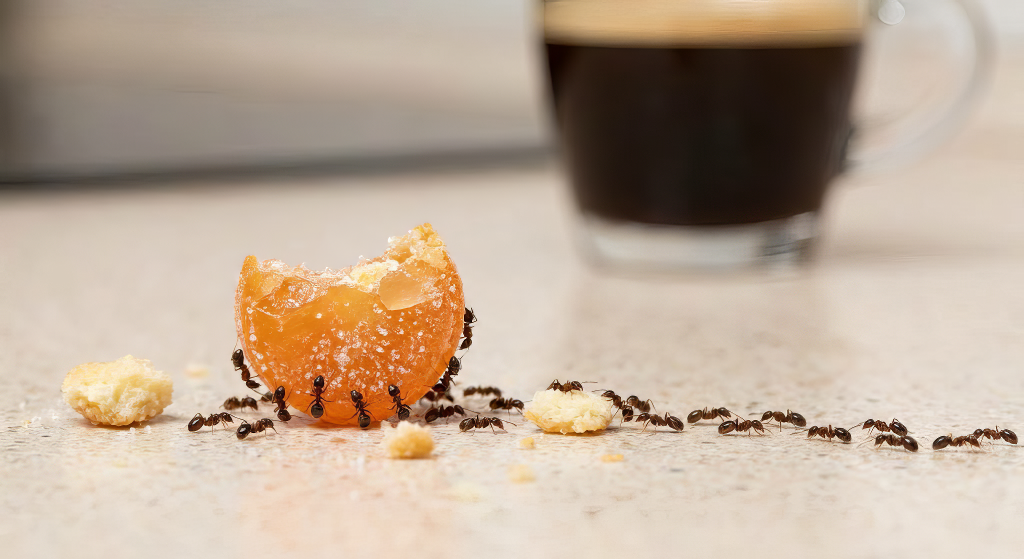
Nuisance Ants: Small ants (sugar ants, pavement ants) that invade kitchens for food.
The Body: Ants have three distinct body segments (head, thorax, abdomen) and a very thin "waist" (pedicel).
-
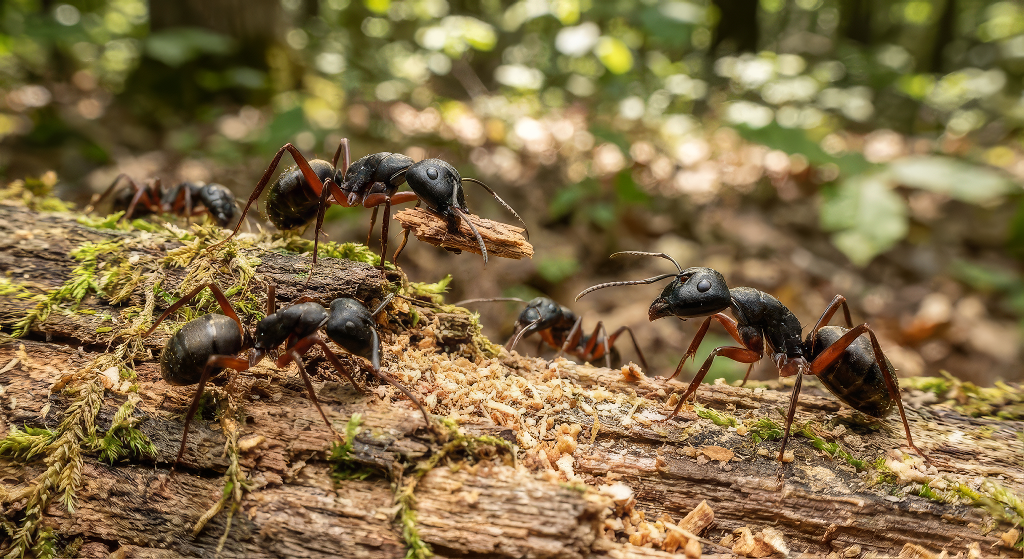
Wood Destroying Ants:Carpenter Ants are large (up to 5/8 inch) and hollow out wood to build nests.
Antennae: They have "elbowed" or bent antennae. (This distinguishes them from termites, which have straight antennae).
-
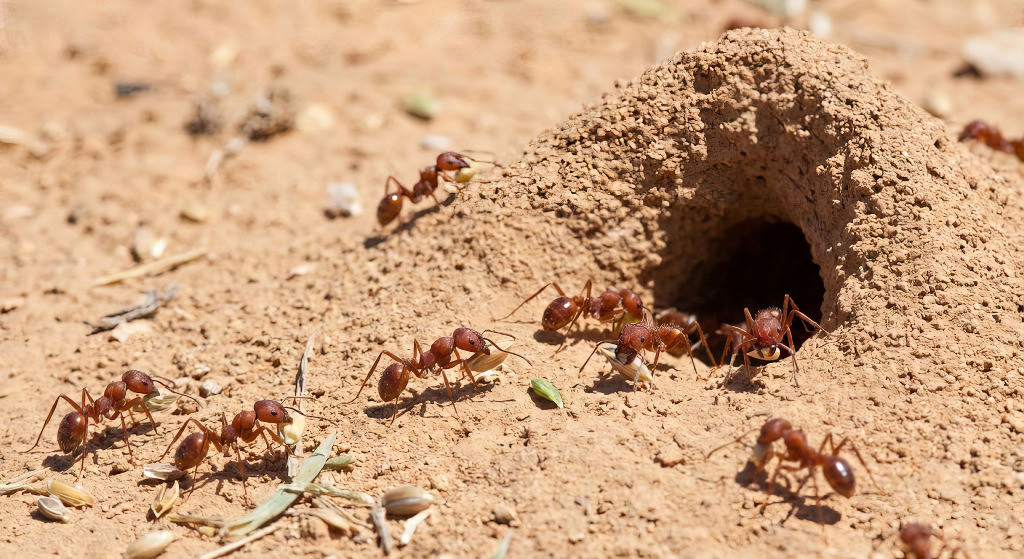
Stinging Ants: Fire ants or Harvester ants that bite/sting
The "Iceberg" Effect: For every ant you see, there may be thousands back in the nest. If you only kill the foragers, the colony simply replaces them.
General Ant Control Information
Identification, Biology, and Control strategies
Ants are the number one nuisance pest in homes. While there are thousands of species, most household infestations share similar behaviors: they are social insects that live in colonies, and they are driven by the search for food and moisture.
1. Identification: Knowing Your Enemy
Because there are so many species (Carpenter Ants, Odorous House Ants, Pavement Ants, Pharaoh Ants, etc.), correct identification is vital.
The Body: Ants have three distinct body segments (head, thorax, abdomen) and a very thin "waist" (pedicel).
Antennae: They have "elbowed" or bent antennae. (This distinguishes them from termites, which have straight antennae).
The Colony:
Workers: These are the ones you see foraging. They are sterile females.
Queens: The reproductive heart of the colony. Some colonies have one queen; others (like Argentine ants) have multiple queens, making them harder to kill.
Common Types:
Nuisance Ants: Small ants (sugar ants, pavement ants) that invade kitchens for food.
Wood Destroying Ants: Carpenter Ants are large (up to 5/8 inch) and hollow out wood to build nests.
Stinging Ants: Fire ants or Harvester ants that bite/sting.
2. Why are they difficult to eliminate?
Killing the ants you see on the counter does not solve the problem.
The "Iceberg" Effect: For every ant you see, there may be thousands back in the nest. If you only kill the foragers, the colony simply replaces them.
Pheromone Trails: Ants leave invisible chemical scents (trails) that guide other ants to food sources. Even if you kill the ants, the trail remains for others to follow.
Colony Splitting ("Budding"): If you spray some species (like Pharaoh or Argentine ants) with common repellents, they panic and split into multiple smaller colonies, spreading the infestation throughout the house.
3. Why are they in my house?
Ants enter homes for three main reasons:
Sugars & Proteins: They are relentless scavengers. A single drop of juice or a few crumbs can attract a scout ant.
Moisture: Like all insects, they need water. Leaky pipes or damp wood attract them.
Harborage: Wall voids provide a stable temperature for the nest, protecting them from the outdoor elements.
4. Professional Treatment Methods
We use a "Transfer Effect" strategy to take down the entire colony, not just the individual ants.
Non-Repellent Sprays: We treat the perimeter with specialized products that ants cannot smell or detect. They walk through it, pick up the product on their bodies, and carry it back to the nest to infect the queen.
Gel & Granular Baits: We offer them food that is actually a slow-acting poison. The workers eat it, carry it back, and feed it to the larvae and the queen.
Direct Nest Treatment: If the nest is located (e.g., a mound outside or a void in the wall), we can treat it directly for immediate results.
Ant Service: Pre-Treatment Checklist
Please prepare your home before our technician arrives to ensure the most effective treatment.
1. Don't Kill the Ants! (Important)
Stop using bug sprays. We need to see where the ants are trailing so we know exactly where to place our baits and treatments. If you kill them or wipe away their trails with bleach/vinegar immediately before we arrive, it makes it harder to locate the nest.
2. Kitchen & Dining Areas
Clean Up: Wipe down counters to remove major food sources (crumbs, grease, spills). We want the ants to be hungry for our bait, not your leftovers.
Clear Access: Move small appliances (toasters, coffee makers) away from the wall so we can inspect the backsplash.
Empty the Garbage: Remove trash to an outdoor bin.
3. Exterior Preparation (for Perimeter Sprays)
Trim Vegetation: Cut back bushes or tree branches that are touching the exterior walls of your house. Ants use these branches as "bridges" to bypass treated soil and enter your home.
Clear Debris: Remove stacks of firewood, bricks, or leaf piles near the foundation, as these are prime nesting sites.
Unlock Gates: Ensure the technician has access to the backyard.
4. Pet Safety
Secure Pets: Keep dogs and cats indoors (if we are treating outside) or in a separate room (if we are treating inside) until the product dries.
Pick up Bowls: Remove pet food and water bowls for the duration of the service.
After Your Service: What to Expect
The success of ant control relies heavily on the "transfer effect." Here is how to manage the days following your treatment.
1. The "Baiting" Phase
If we applied gel bait (small dots of clear or brown gel):
Let them Eat: You may see ants swarming the bait. DO NOT KILL THEM. Let them eat it and return to the nest. This is exactly what we want.
Don't Clean the Bait: Do not wipe the area where the bait is placed with cleaning products.
2. "Ghost Ant" Activity
It is normal to see a temporary increase in ant activity for 24–48 hours after treatment. The bait attracts them, and the non-repellent sprays do not kill them instantly.
The Drop-Off: After 3–5 days, you should notice a sharp decline in population as the queen and colony begin to die off.
3. Maintain Sanitation
Keep it Clean: Continue to wipe up crumbs and spills. If there is tastier food (like a spill of soda) nearby, they might ignore our bait.
Seal Food: Keep sugar, cereal, and pet food in airtight containers.
4. Avoid "Wash-Off"
Exterior: If we sprayed the exterior foundation, do not water your lawn or wash the siding for 24 hours to allow the product to bond with the surface.
Interior: Do not mop right up against the baseboards for at least a week.
5. When to Call Us
If you are still seeing a significant number of live ants 10-14 days after the treatment, please contact us for a follow-up. It is possible the colony is larger than expected or there are multiple nests requiring additional attention.
-
Rain floods ants out of their underground nests. They move indoors seeking higher, drier ground. Conversely, during extreme droughts, they move indoors seeking water.
-
We do not recommend this.
Vinegar/Cleaners: This only wipes away the scent trail temporarily. It does not kill the colony.
Over-the-Counter Sprays: These are usually "repellents." While they kill the ants they touch, they signal the rest of the colony to avoid that area. This often causes the ants to scatter and build new nests in harder-to-reach places (inside walls).
-
Most household ants are just a nuisance. However:
Carpenter Ants: Can cause significant structural damage to your home by excavating wood.
Pharaoh Ants: Are known to transmit bacteria like Staphylococcus and Salmonella, especially in healthcare or food prep environments.
Fire Ants: Can inflict painful stings that may cause allergic reactions.
-
Ant control takes patience because we are relying on the ants to spread the treatment to the queen.
Small Ants: Typically controlled within 7–14 days.
Carpenter Ants: May take longer (3–4 weeks) due to the complexity of their satellite nests.
-
These are "swarmers" (reproductives). When a colony gets large enough, it sends out winged males and females to mate and start new colonies. Seeing winged ants inside usually indicates a mature nest exists somewhere within your walls.