The Ultimate Hitchhikers
Bed bugs are one of the most stressful pests a homeowner or business owner can face. Unlike many other pests, bed bugs have nothing to do with cleanliness; they are world-class travelers that hitchhike into the cleanest homes, five-star hotels, and public spaces on luggage, clothing, and used furniture.
Because they are nocturnal and experts at hiding, an infestation can grow significantly before it is even noticed.
Understanding Bed Bug Behavior
Bed bugs are small, flat, reddish-brown insects about the size of an apple seed. They feed exclusively on blood, usually while their "host" is asleep.
The Hiding Experts: Their flat bodies allow them to squeeze into tiny cracks, electrical outlets, behind baseboards, and inside mattress seams.
Rapid Reproduction: A single female can lay 200 to 500 eggs in her lifetime. In warm conditions, a bed bug can go from egg to adult in just five weeks.
The "Waiting Game": Bed bugs are incredibly resilient. In cooler environments, an adult bed bug can survive for several months without a single blood meal.
Why "Do-It-Yourself" Rarely Works
Bed bugs are notoriously difficult to eliminate with over-the-counter products.
Resistance: Many modern bed bug populations have developed a resistance to common store-bought bug sprays.
Deep Seeding: Foggers or "bug bombs" often fail to reach deep into the crevices where bed bugs hide. In fact, these products can often cause the bugs to scatter deeper into the walls, making the problem harder to treat.
Our Professional Elimination Strategy
We provide a comprehensive, multi-step approach to ensure your home is completely bed bug-free:
Detailed Inspection: We perform a top-to-bottom search of sleeping areas, furniture, and baseboards to confirm the extent of the infestation.
Targeted Treatments: We use specialized, professional-grade materials that provide both immediate knockdown and long-term residual protection.
Steam & Heat Application: Where applicable, we use high-temperature steam to kill bed bugs and their eggs on contact without the use of heavy chemicals on sensitive surfaces.
Follow-Up Services: Because bed bug eggs are highly resistant, we perform rigorous follow-up inspections to ensure that no new hatchlings have survived.
Get Your Peace of Mind Back
Dealing with bed bugs is exhausting, but you don't have to do it alone. We use the latest technology and industry-leading methods to clear your home quickly and discreetly.
-
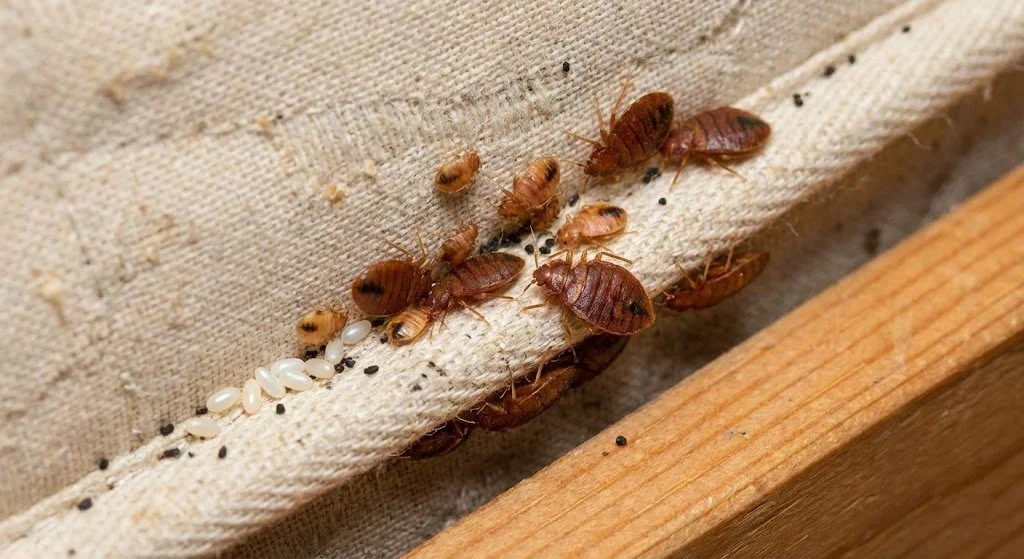
Appearance: Adult bed bugs look like a
flat apple seed. They are reddish-brown, oval-shaped, and wingless.
-
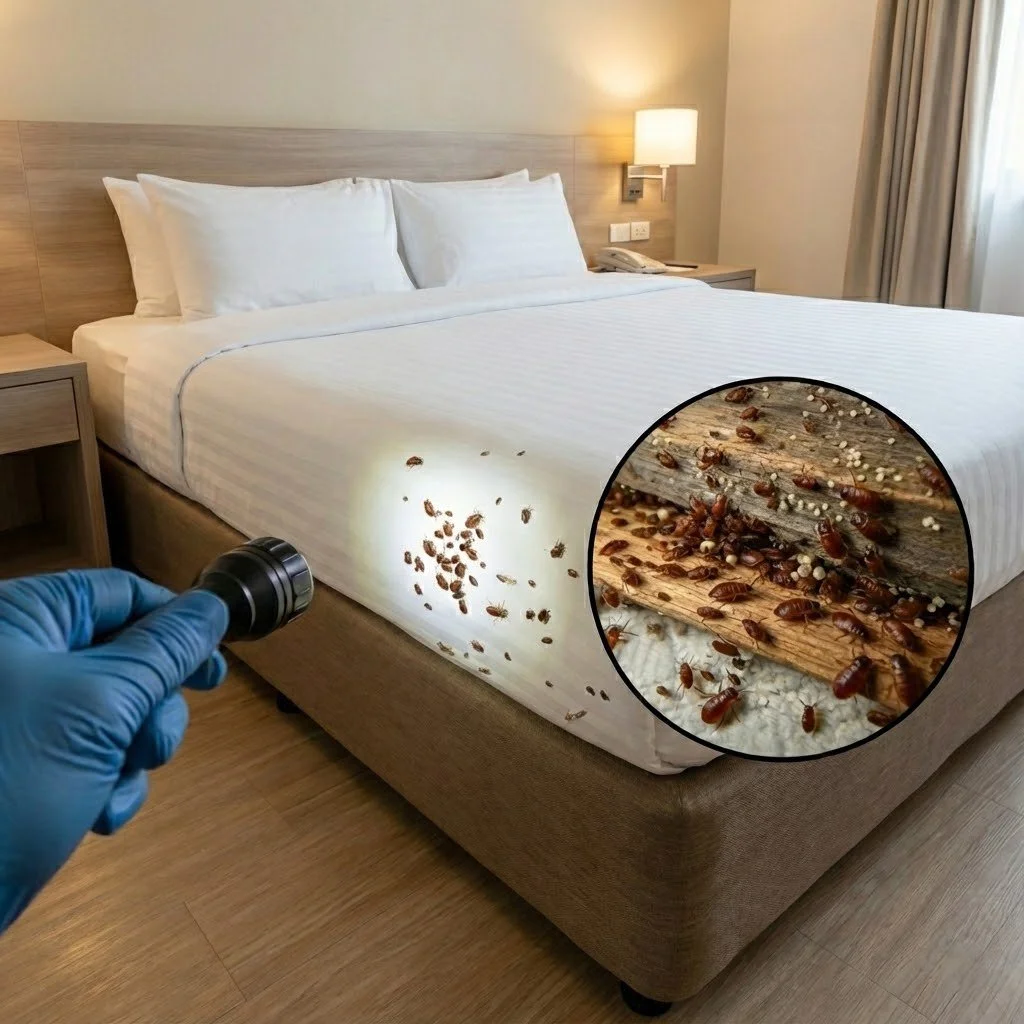
Adults: The size and shape of an apple seed (about 1/4 inch long). They are flat, oval, and reddish-brown. After feeding, they become swollen and redder.
Nymphs (Young): Translucent or yellowish-white, ranging from the size of a pinhead to a sesame seed.
Eggs: Tiny, pearly white, and sticky. Usually found in clusters in tight crevices.
-
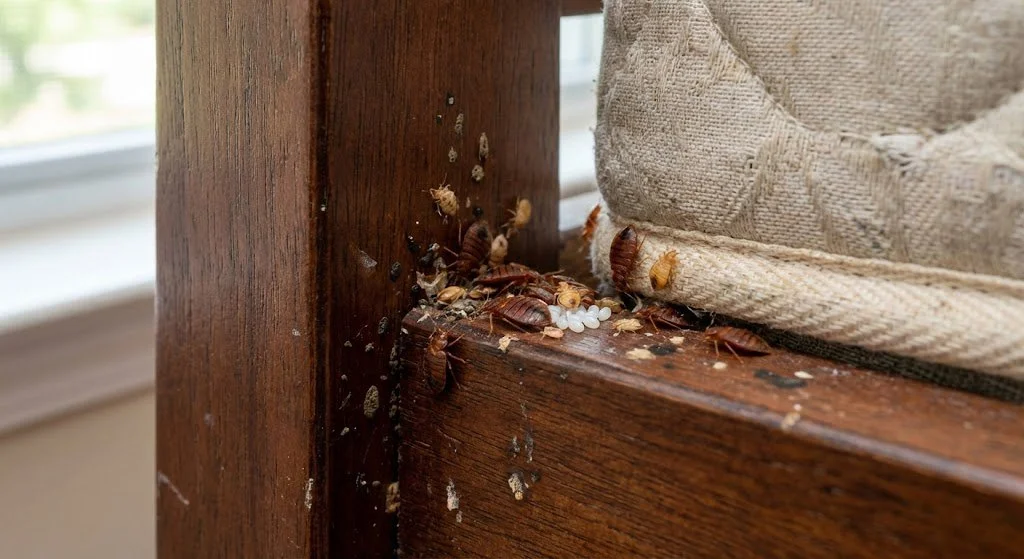
Size: 4.5 – 6 mm (about 3/16 to 1/4 inch).
Appearance: Flat, oval-shaped, and reddish-brown.
After Feeding: If they have recently eaten, their bodies engorge with blood, becoming longer, more cylindrical (balloon-like), and brighter red.

-
Bed bugs are "hitchhikers." You likely brought them home on:
Luggage: From a recent hotel stay or vacation.
Used Furniture: Buying a second-hand mattress, couch, or nightstand is a common cause.
Guests: A visitor may have unknowingly brought them in on their bag or coat.
Neighbors: In apartments, they can travel through wall voids and electrical sockets from an infested unit next door.
-
Usually, no. In most cases, we can treat the mattress and box spring. We highly recommend purchasing a Bed Bug Proof Encasement (a zippered cover) to trap any remaining bugs inside and prevent new ones from getting in.
-
Bed bugs are not known to transmit diseases to humans. However, they cause:
Secondary Infection: Scratching the bites can lead to skin infections.
Psychological Stress: Insomnia, anxiety, and "phantom itching" are very common.
-
NO. Do not switch rooms. If you move to the couch or a guest room, the bed bugs will follow you. This spreads the infestation to other parts of the house, making it much harder and more expensive to treat. You must continue sleeping in your bed to attract the bugs to the treated areas.
-
If using chemical treatment, it is rarely a "one-and-done" job. It typically requires 2 to 3 visits spaced 10–14 days apart to catch eggs that hatch after the first spray.