
Small Pests, Big Problems
Ants are the most common household pest, and for a good reason—they are highly social, extremely organized, and persistent. While a single ant might seem harmless, it is usually a "scout" for a colony that could house thousands.
Effective ant control requires more than just a can of spray; it requires understanding the specific species and their complex social structures.
A Sophisticated Social Structure
Ants operate under a strict caste system where every individual has a specific job to ensure the colony’s survival.
The Queen: The heart of the colony. Her only job is to lay thousands of eggs. Some colonies have multiple queens, making them even harder to eliminate.
Workers: Sterile females that forage for food, care for the larvae, and maintain the nest. These are the ants you see in your kitchen.
Soldiers: Larger workers that protect the colony from predators.
Drones & Princesses: Winged ants (swarmers) that leave the nest to start new colonies.
Why DIY Treatments Often Fail
Many homeowners reach for a contact spray as soon as they see an ant trail. While this kills the ants you see, it often makes the problem worse through a process called "budding." When certain species (like Pharaoh ants) sense a threat from a chemical spray, the colony splits into several new colonies to survive, turning one small problem into five large ones.
Our Professional Solution
Our approach goes beyond the surface to strike the colony at its source:
Inspection & Identification: We find the trailing patterns to locate the hidden nest.
Non-Repellent Barriers: We use advanced treatments that ants cannot detect. They walk through the product and carry it back to the queen, eliminating the entire colony from the inside out.
Entry Point Exclusion: We identify cracks, crevices, and utility penetrations where ants are entering and recommend sealing methods.
Granular Perimeter Protection: We create a "buffer zone" around your foundation to stop new colonies from moving in.
Don't Let Ants Take Over Your Home
A few ants today can become a massive infestation tomorrow. Our year-round protection plans ensure that your home remains "ant-proof" regardless of the season.
-
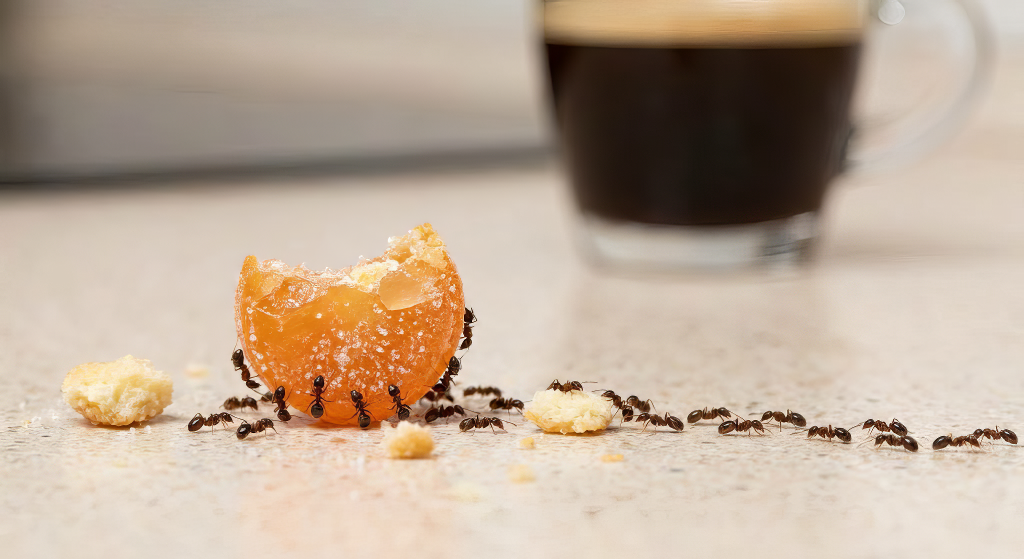
Nuisance Ants: Small ants (sugar ants, pavement ants) that invade kitchens for food.
The Body: Ants have three distinct body segments (head, thorax, abdomen) and a very thin "waist" (pedicel).
-
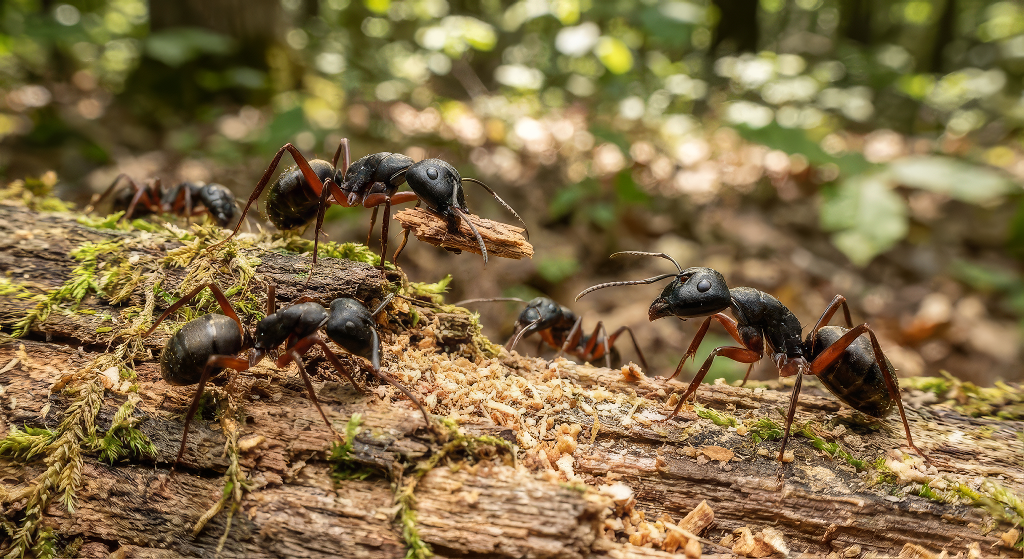
Wood Destroying Ants:Carpenter Ants are large (up to 5/8 inch) and hollow out wood to build nests.
Antennae: They have "elbowed" or bent antennae. (This distinguishes them from termites, which have straight antennae).
-
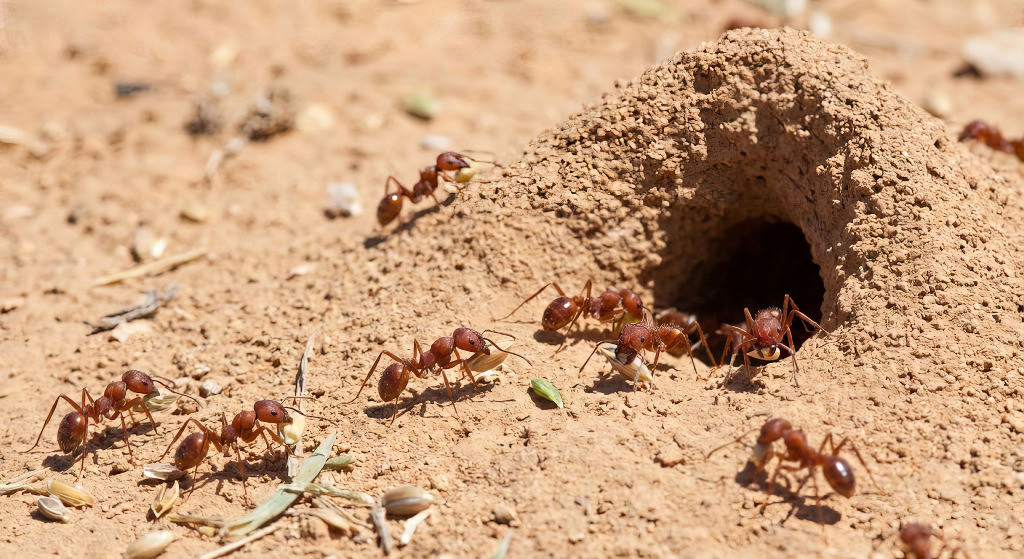
Stinging Ants: Fire ants or Harvester ants that bite/sting
The "Iceberg" Effect: For every ant you see, there may be thousands back in the nest. If you only kill the foragers, the colony simply replaces them.
-
Rain floods ants out of their underground nests. They move indoors seeking higher, drier ground. Conversely, during extreme droughts, they move indoors seeking water.
-
We do not recommend this.
Vinegar/Cleaners: This only wipes away the scent trail temporarily. It does not kill the colony.
Over-the-Counter Sprays: These are usually "repellents." While they kill the ants they touch, they signal the rest of the colony to avoid that area. This often causes the ants to scatter and build new nests in harder-to-reach places (inside walls).
-
Most household ants are just a nuisance. However:
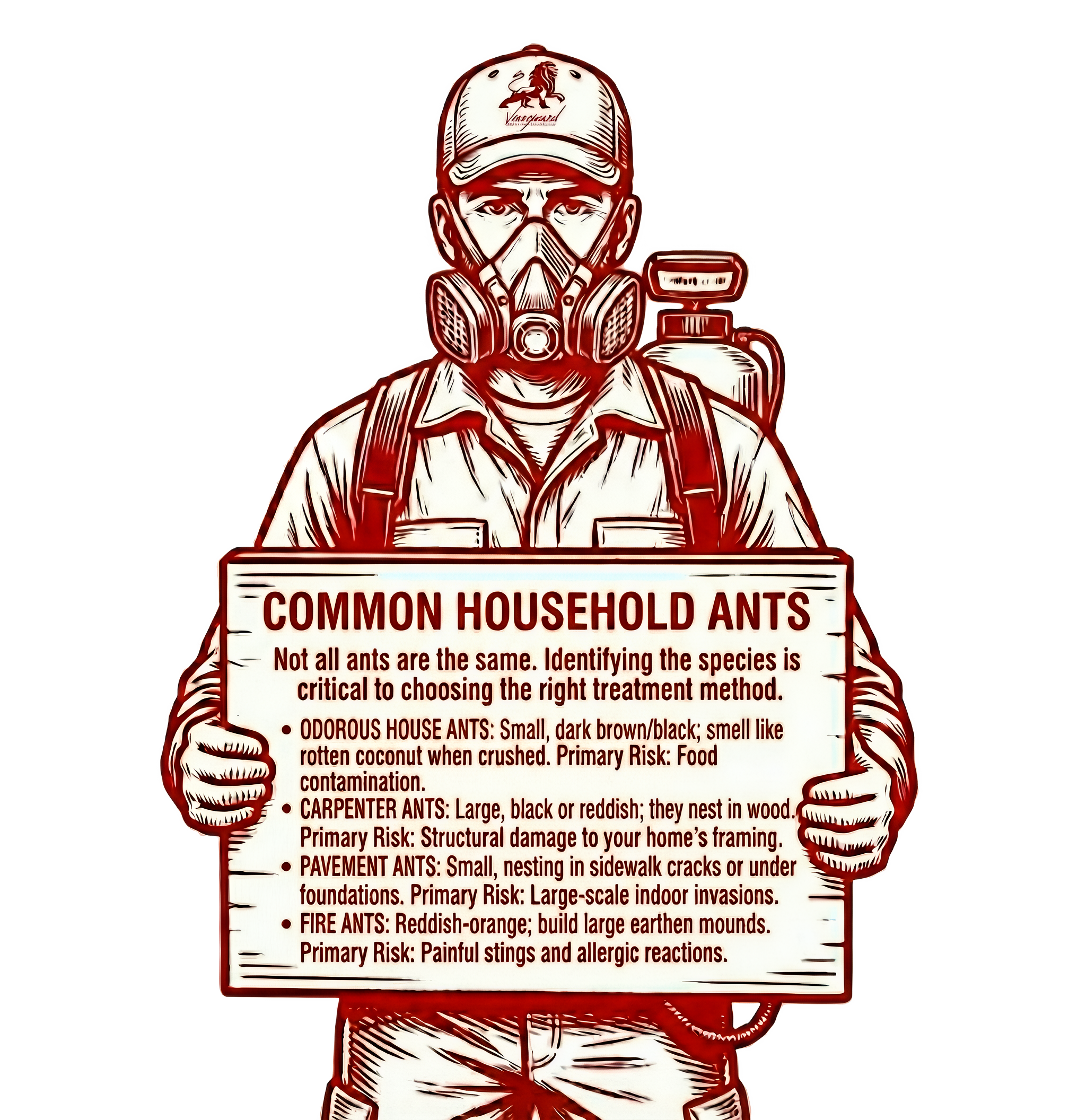
Carpenter Ants: Can cause significant structural damage to your home by excavating wood.
Pharaoh Ants: Are known to transmit bacteria like Staphylococcus and Salmonella, especially in healthcare or food prep environments.
Fire Ants: Can inflict painful stings that may cause allergic reactions.
-
Ant control takes patience because we are relying on the ants to spread the treatment to the queen.
Small Ants: Typically controlled within 7–14 days.
Carpenter Ants: May take longer (3–4 weeks) due to the complexity of their satellite nests.
-
These are "swarmers" (reproductives). When a colony gets large enough, it sends out winged males and females to mate and start new colonies. Seeing winged ants inside usually indicates a mature nest exists somewhere within your walls.