Territorial Takedowns
While many stinging insects play a role in the ecosystem, wasps are often unwelcome guests due to their territorial nature and painful stings. Unlike honeybees, which can only sting once, wasps are capable of stinging multiple times and can become highly aggressive if they feel their nest is threatened.
Understanding the difference between a solitary wasp and a social colony is the first step in ensuring the safety of your family and pets.
Understanding the Threat
Wasps are more than just a backyard nuisance. For many people, a wasp sting is not just painful—it can lead to anaphylaxis, a life-threatening allergic reaction.
Aggressive Defense: Social wasps (like Yellow Jackets) release a "danger pheromone" when they sting or are crushed. This chemical signal alerts the rest of the colony to join the attack.
Late-Season Aggression: As summer turns to fall, wasp colonies focus less on building the nest and more on finding sugar. This is when they become most disruptive at outdoor gatherings and trash bins.
The Danger of "DIY" Removal
Attempting to remove a nest with a ladder and a can of store-bought spray is one of the leading causes of pest-related injuries.
Reach: Most sprays have a limited range, requiring you to get dangerously close to the nest.
The "Hidden" Colony: If you have wasps entering a hole in your siding, never plug the hole. This will force the wasps to chew through your drywall to find a new exit, leading them directly into your living room.
Protective Gear: Professionals use specialized bee suits that are thick enough to prevent stingers from reaching the skin—standard clothing offers almost no protection.
Our Professional Wasp Solutions
We prioritize safety and efficiency to clear your property of stinging threats:
Identification & Risk Assessment: We determine the species and the most strategic way to approach the nest without causing a swarm.
Specialized Equipment: Using long-range poles and protective gear, we can treat nests in high peaks and difficult-to-reach eaves.
Direct Nest Treatment: We use professional-grade dusts or aerosols that penetrate deep into the nest, ensuring the queen and the workers are eliminated.
Preventative Treatments: We can apply residual barriers to common nesting sites (like shutters and porch ceilings) in the early spring to prevent new queens from starting colonies.
Enjoy Your Yard in Peace
Don't let a hidden nest turn your backyard barbecue into an emergency. Our technicians are trained to handle even the most aggressive colonies safely and effectively.
-
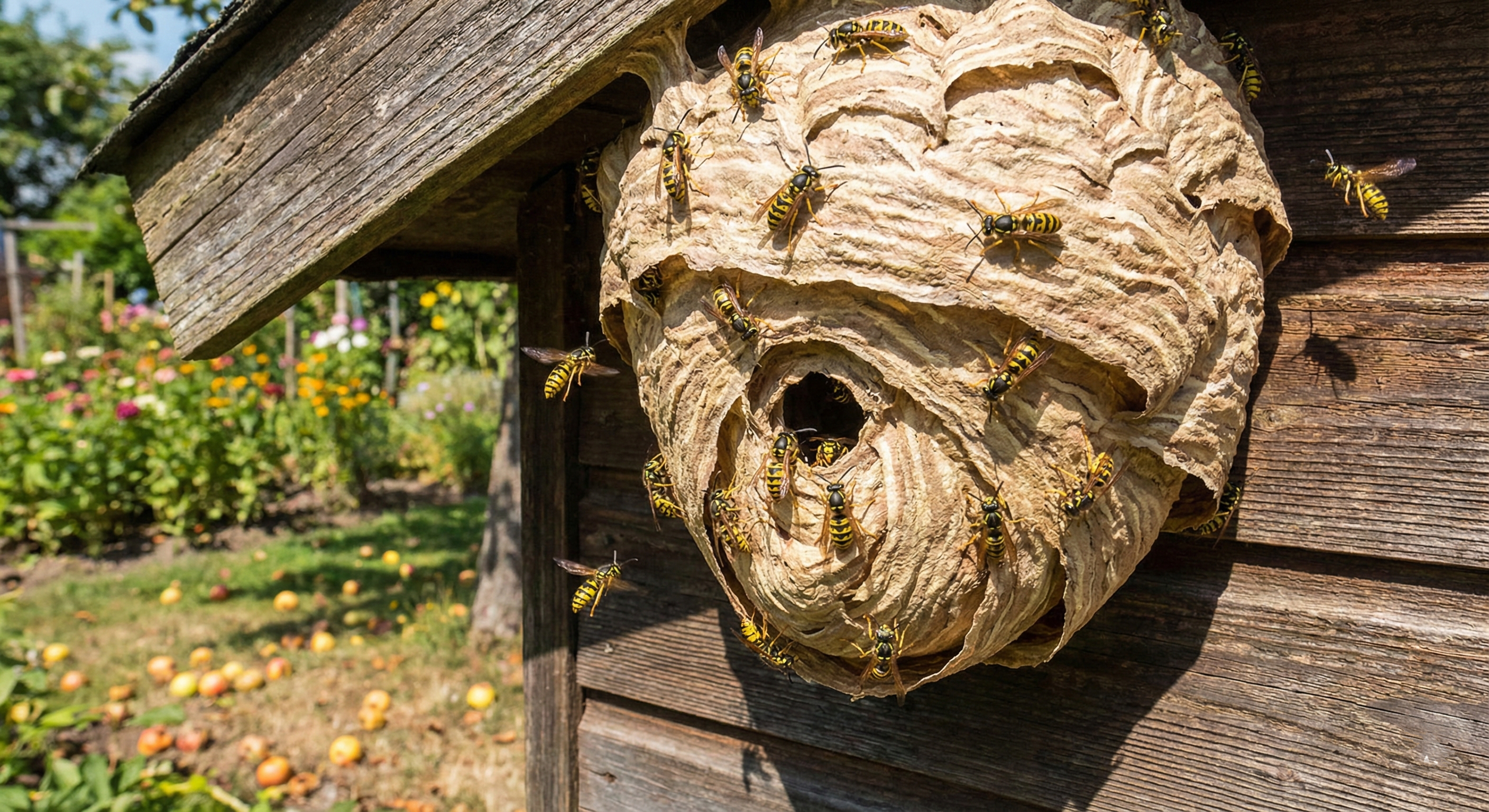
Yellow Jackets: Bright yellow and black; fast fliers. Often found underground or inside wall voids. Very aggressive.
-
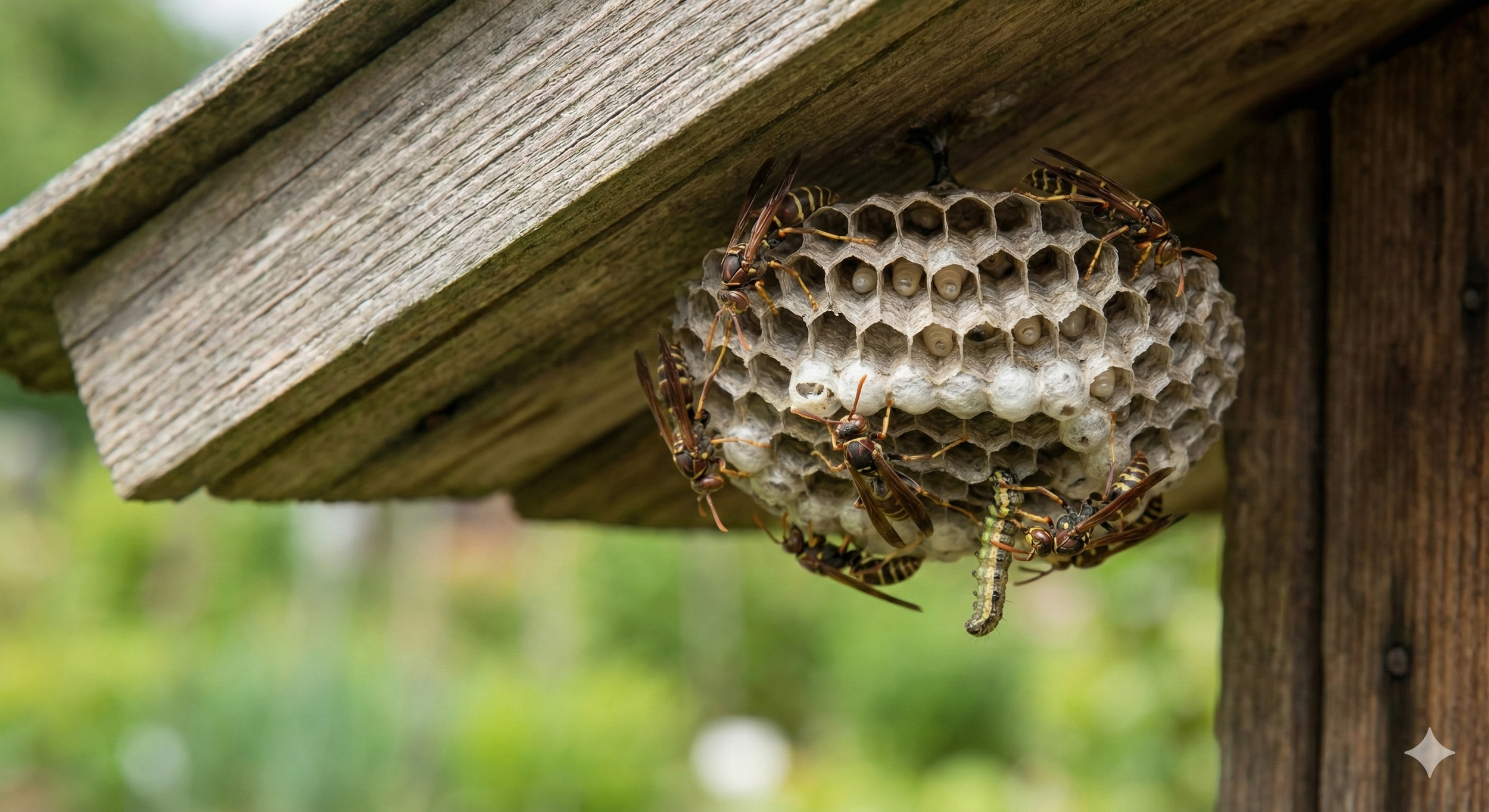
Paper Wasps: Slender, long legs; reddish-brown or yellow. "Umbrella" shaped nests with open cells, usually under eaves.
-
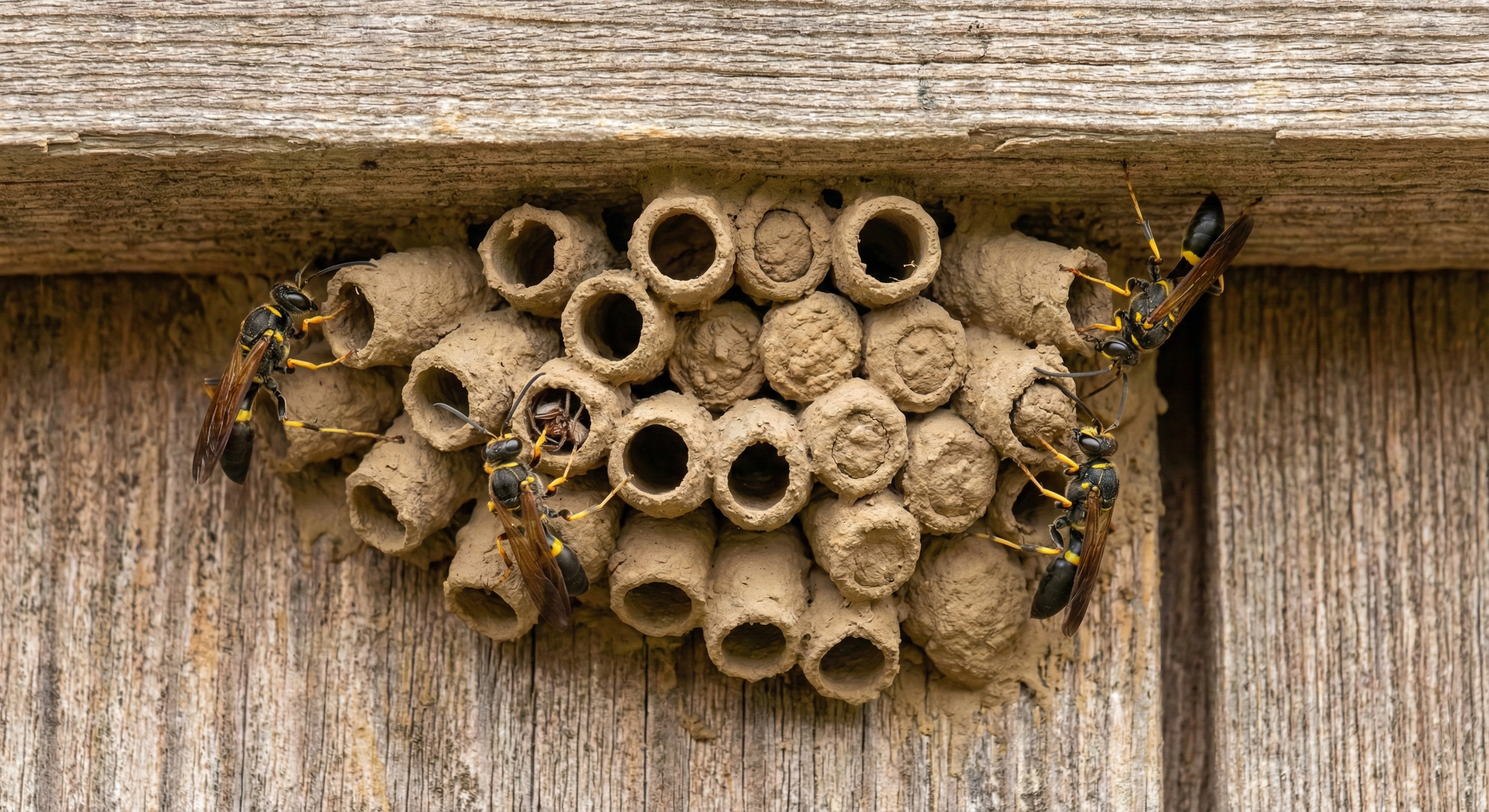
Mud Daubers: Long, thin "waist"; usually black or metallic blue. Hard mud tubes on walls or ceilings. Typically solitary and less aggressive.

-
While they may look similar at a distance, wasps have slender bodies with a narrow "waist" and smooth, shiny skin. Bees are generally rounder and "fuzzier." Behaviorally, wasps are more aggressive predators, while bees are pollinators that typically only sting if provoked.
-
Wasps are drawn to areas that provide food and nesting sites. In the spring, they look for protein (insects); in late summer, they seek out sugars (soda, fallen fruit, or nectar). Eaves, soffits, birdhouses, and undisturbed shrubs provide the perfect structural support for their nests.
-
Yes, particularly because wasps can sting multiple times without losing their stinger. For most, this causes painful swelling. However, for individuals with allergies, a wasp sting can lead to anaphylaxis, a life-threatening medical emergency. Their presence near doorways or play areas is a significant safety risk.
-
We strongly advise against DIY nest removal. When a wasp nest is threatened, the colony releases alarm pheromones that signal hundreds of wasps to attack simultaneously. Store-bought "foaming sprays" often fail to reach the center of the nest, leaving the user vulnerable to multiple stings.
-
Wasp activity usually peaks in late summer and early autumn. This is when colonies are at their largest size and the "worker" wasps become more protective and aggressive as they search for sugar-rich food sources to sustain the queen through the winter.
-
Our technicians use specialized protective gear and professional-grade knockdown agents that neutralize the colony quickly. Once the wasps are no longer a threat, we physically remove the nest and treat the area with a residual repellent to prevent other wasps from rebuilding in the same spot.
-
To keep wasps away, we recommend:
Sealing gaps in your home's siding, eaves, and window frames.
Keeping outdoor trash cans tightly sealed.
Picking up fallen fruit from trees immediately.
Scheduling a preventative exterior treatment in early spring to stop queens from established new nests.