Persistent Survivors
Cockroaches are more than just a repulsive sight; they are one of the most significant health hazards in the pest control industry. Known for their incredible survival skills, these pests can live for weeks without food and can even survive for a week without their head.
Because they thrive in dark, damp environments and reproduce at an alarming rate, a small sighting can quickly escalate into a full-blown infestation.
The Health Risks: Why They Matter
Cockroaches are often referred to as "filth pests." They spend their time in sewers, trash cans, and drains, picking up harmful bacteria on their legs and bodies which they then carry onto your food and countertops.
Pathogen Carriers: They are known to spread Salmonella, E. coli, and parasitic worms.
Asthma & Allergies: Cockroaches produce a protein (found in their droppings, saliva, and shed skins) that is a leading trigger for asthma attacks and allergic reactions, especially in children and the elderly.
Contamination: They leave behind a lingering, musty odor that can permeate a home and ruin stored food.
The "Hidden" Infestation
Cockroaches are photophobic (light-avoiding) and thigmotactic (they like feeling a solid surface on all sides of their body). This means for every one cockroach you see in the open, there are likely dozens—or hundreds—hiding in:
Behind and underneath refrigerators and stoves.
Inside the motor housing of appliances.
In the folds of paper grocery bags and cardboard boxes.
Within wall voids and behind baseboards.
Our Professional Elimination Process
Treating cockroaches requires a strategic, multi-pronged approach that focuses on the source rather than just the surface.
Sanitation Audit: We identify the food and water sources (like leaky pipes or grease buildup) that are sustaining the population.
Precision Baiting: We use high-attractant gel baits that cockroaches eat and share with the rest of the colony, leading to a "domino effect" of elimination.
Insect Growth Regulators (IGRs): We utilize advanced chemistry that prevents juvenile cockroaches from reaching reproductive maturity, effectively "breaking" the life cycle.
Void Treatments: We apply specialized dusts and aerosols into the cracks and crevices where cockroaches hide and breed.
Take Back Your Kitchen
You don’t have to share your home with cockroaches. Our professional-grade solutions are designed to eliminate current populations and provide a protective barrier to prevent their return.
Seeing signs of cockroaches? Would you like me to create a "Commercial Kitchen Checklist" for your business clients, or perhaps a guide on how to prevent cockroaches from hitchhiking into a home via deliveries and boxes?
-
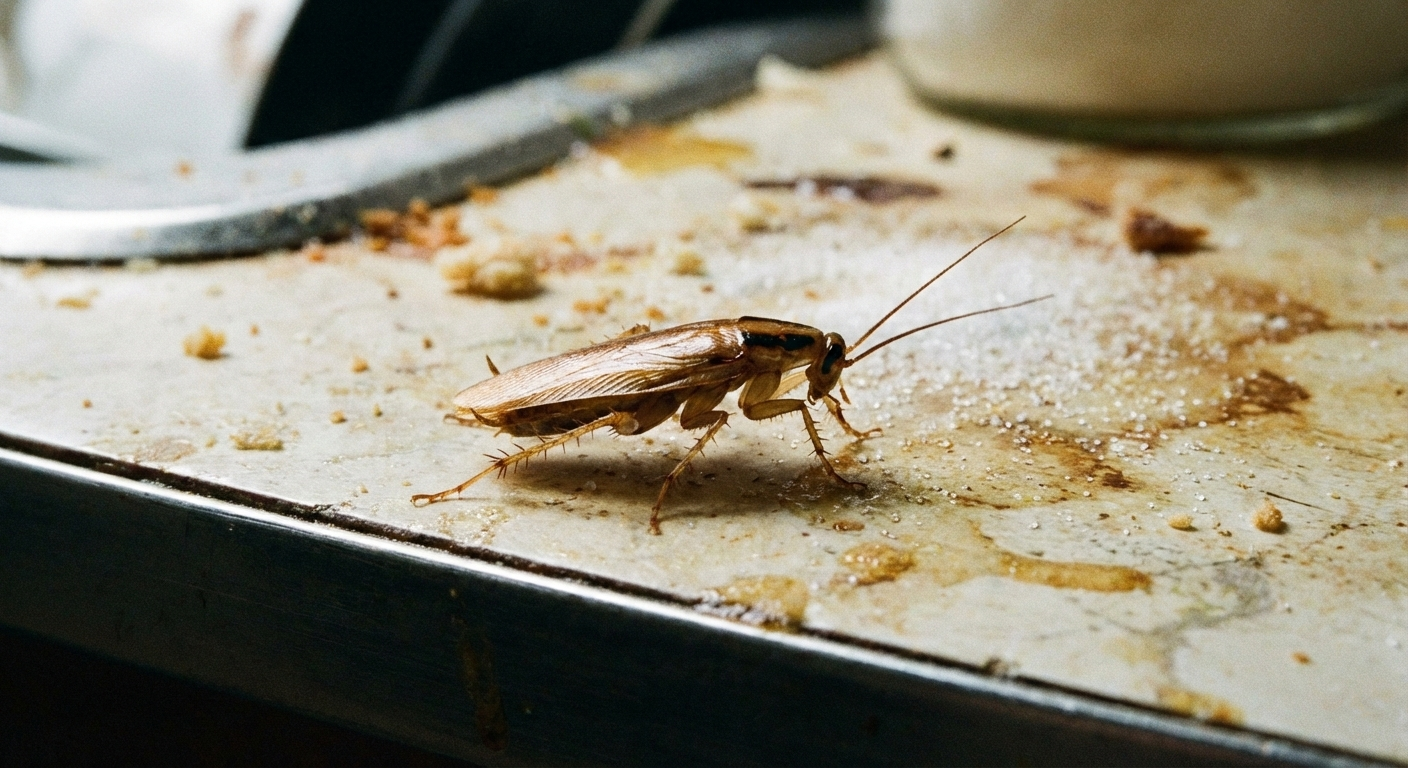
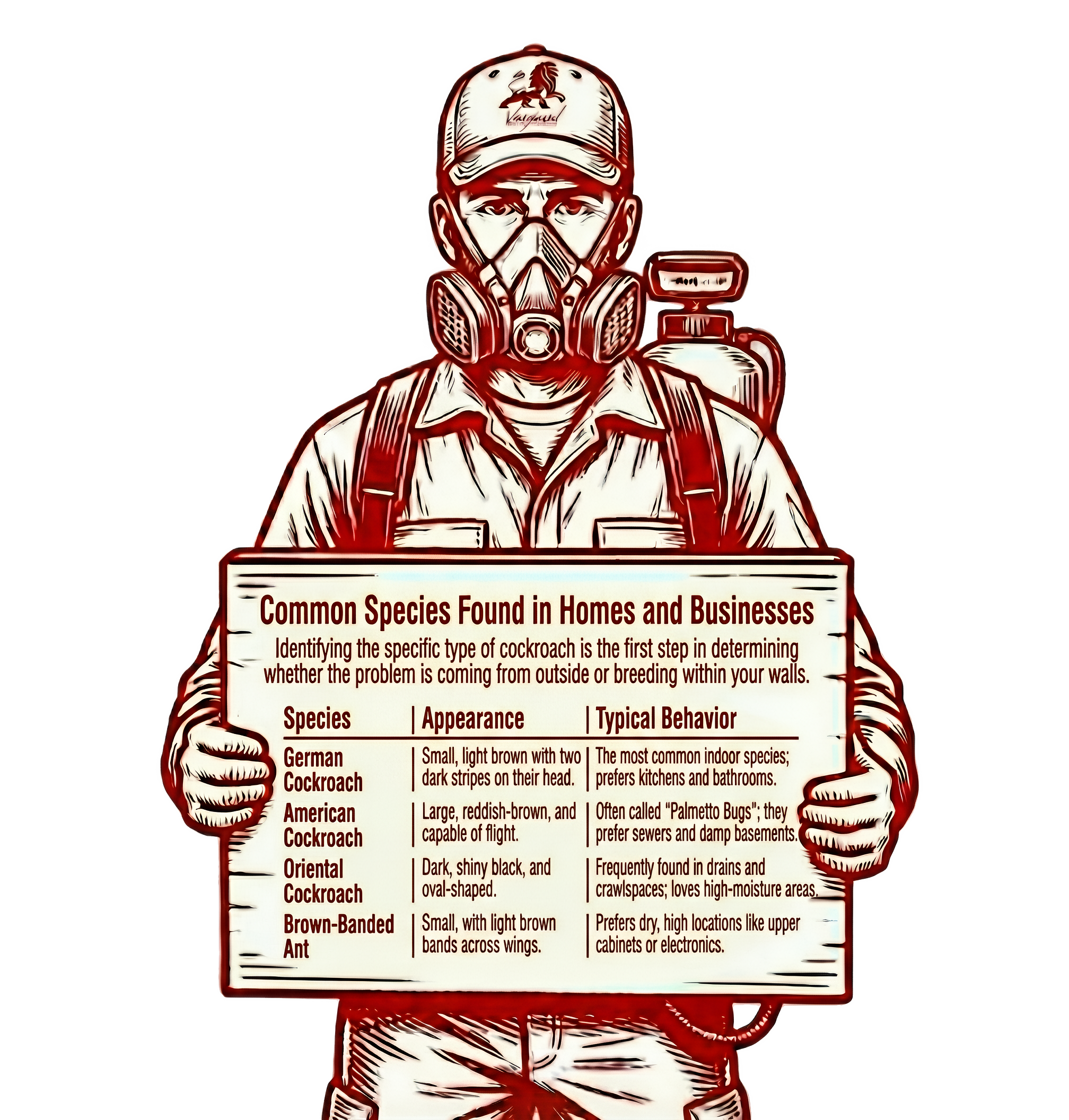
German Cockroach: Small, light brown with two dark stripes on their head.The most common indoor species; prefers kitchens and bathrooms.
-
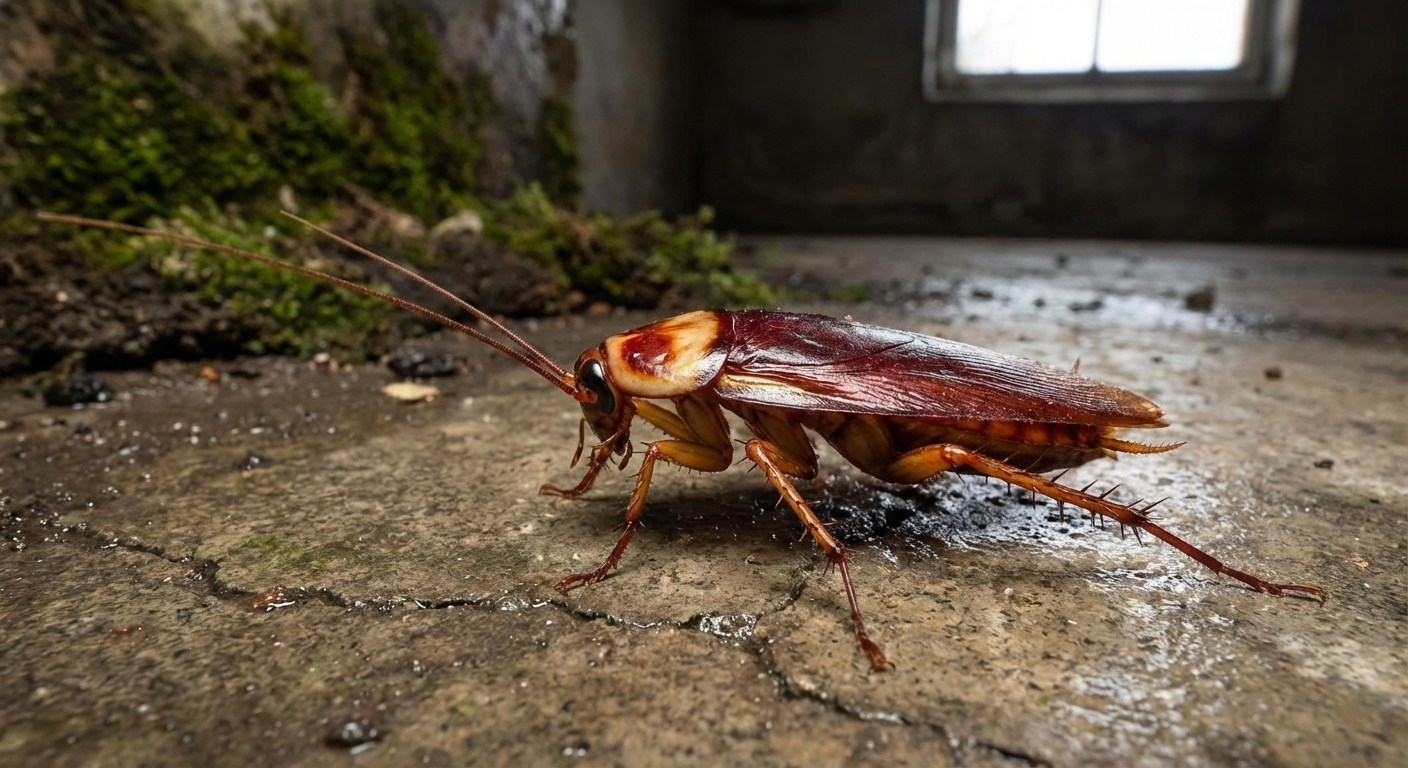
American Cockroach: Large, reddish-brown, and capable of flight.Often called "Palmetto Bugs"; they prefer sewers and damp basements.
-
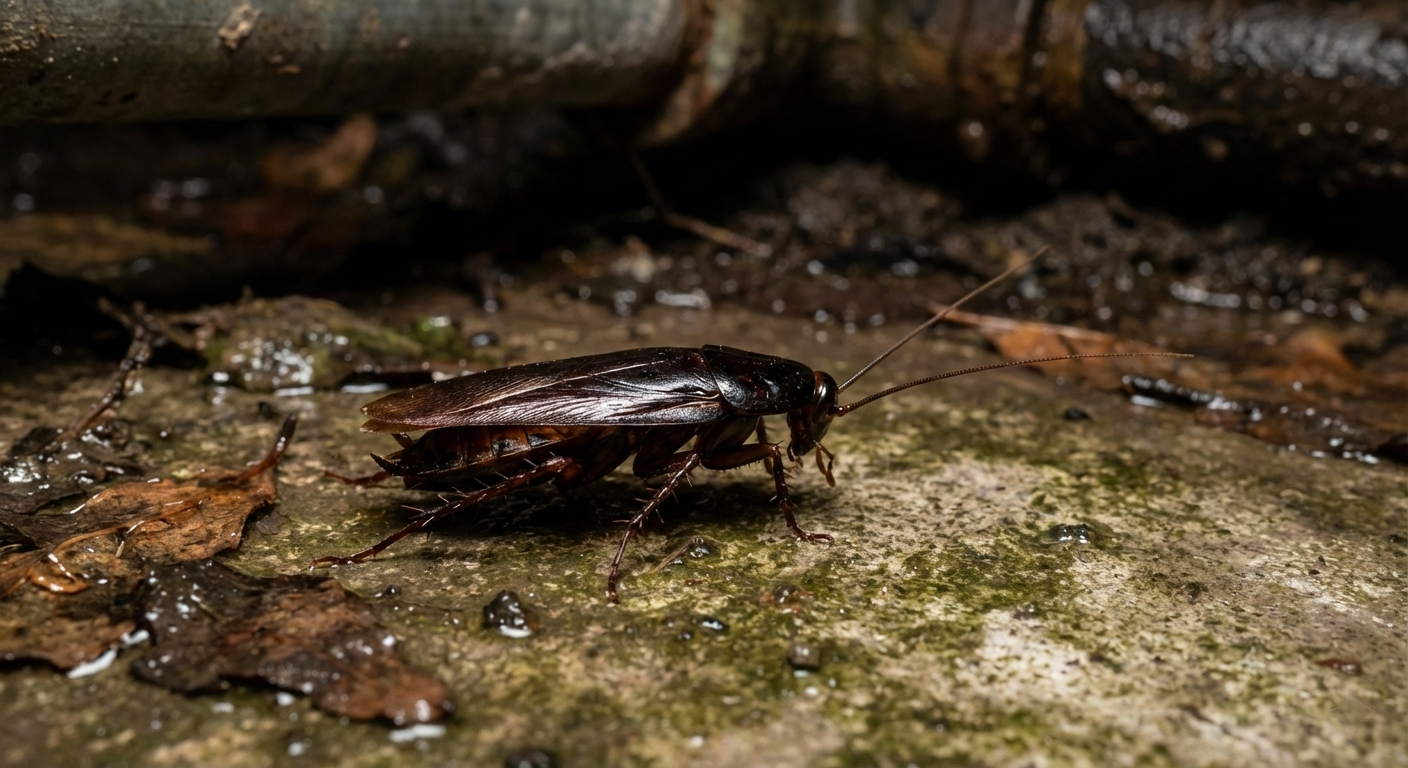
Oriental Cockroach: Dark, shiny black, and oval-shaped.Frequently found in drains and crawlspaces; loves high-moisture areas.

-
This is the most common question we hear. While cockroaches are attracted to food and moisture, having them isn't a sign of a dirty home. They are opportunistic and can enter through:
Small cracks and crevices in walls or foundations.
Grocery bags, cardboard boxes, or used furniture.
Drains and pipes from neighboring units or the street.
Gaps under doors or around windows.
-
Yes. Cockroaches are more than just a nuisance. They are known to:
Spread Bacteria: They carry pathogens like Salmonella, E. coli, and Listeria on their bodies.
Trigger Allergies: Their droppings, saliva, and shedding skin contain proteins that can cause allergic reactions.
Worsen Asthma: They are a leading trigger for asthma attacks, especially in children and the elderly.
-
Unfortunately, cockroaches are nocturnal and very good at hiding. Seeing one during the day often means their nesting area is overcrowded or they were forced out in search of food. For every one you see, there are likely many more hiding behind walls, under appliances, or in cabinets.
-
Aside from seeing a live insect, look for these "red flags":
Droppings: Small specks that look like coffee grounds or black pepper.
Smear Marks: Dark, irregular streaks on horizontal surfaces or wall-floor junctions.
Egg Capsules (Oothecae): Small, reddish-brown pill-shaped casings.
Unusual Odor: A persistent, musty, or "oily" smell.
-
While DIY sprays might kill the few bugs you see, they rarely reach the nest. Cockroaches are incredibly resilient and have even developed resistance to many over-the-counter pesticides. Professional treatment uses Integrated Pest Management (IPM)—combining baits, growth regulators, and exclusion methods—to eliminate the colony at its source.
-
A typical infestation usually requires 2 to 3 weeks to see a significant reduction. However, because cockroach eggs are resistant to many treatments, a follow-up visit is often necessary to ensure that newly hatched nymphs are also eliminated before they can breed.
-
Your family’s safety is our top priority. We use EPA-approved products and targeted application methods (like gel baits and dusts) that are placed in areas inaccessible to children and pets. We will provide specific instructions if you need to vacate the area for a short period during a liquid application.